RB
ROBOBRILLIANCE
Request Pilot →
Geofence: AUSTIN · 30.2672 N, 97.7431 W|Active vehicles: 1,184|Demand index 0.74

Where the car
should be, before
the rider opens the app.

ROBOBRILLIANCE is the predictive fleet brain for operators running 100% unsupervised FSD. We tell every idle robotaxi where to drive next, when to charge, and when to clean — using hardcore spatiotemporal math, not heuristics. No humans in the dispatch loop. No drivers behind the wheel. No wasted miles.

RPVH-01
+38.4%
Revenue per vehicle-hour
DHM-07
−61%
Deadhead miles
LAT-µ
92ms
Dispatch decision latency
SLA-A
99.97%
Uptime on demand engine
Built for the operators shipping driverless service today
TESLA ROBOTAXIZOOXWAYMOMAY MOBILITYPONY.AIWERIDEBAIDU APOLLOAUTOXTESLA ROBOTAXIZOOXWAYMOMAY MOBILITYPONY.AIWERIDEBAIDU APOLLOAUTOX
§01The platform

An idle robotaxi is a bug, not a feature.

Every minute a driverless vehicle sits in a parking lot, your unit economics decay. ROBOBRILLIANCE runs a continuous dispatch loop that predicts demand at 80m resolution and routes idle vehicles toward expected revenue — accounting for charge, hygiene, and supercharger queue dynamics.

01

Demand Field Inference

Spatiotemporal Hawkes processes fused with weather, events, transit, payroll cycles, and bar-close curves. We resolve the demand field to 80m hex cells, refreshed every 8 seconds across the geofence polygon.

02

Idle Repositioning Policy

When a car drops a rider, we solve a constrained MDP — go to the highest-EV cell, unless state-of-charge is below threshold or hygiene score has decayed. The car never sits. The car never guesses.

03

Energy & Hygiene Routing

Low SoC routes to the nearest ROBOBRILLIANCE charge pod. Dirty cabin routes to the nearest robot-staffed wash bay. We co-optimize the queue so pods stay >70% utilized without ever blocking a paying trip.

04

Geofence Real Estate

We buy land inside the operational polygon — Austin, SF, Phoenix, Bay Area expansion. Each parcel is engineered for inductive charging mats, Superchargers, and Ground-Truth-class robots that clean and plug in.

§02The mathematics

Probability fields,
not pin-drops.

Our demand engine fits a non-stationary Hawkes process per hex cell, conditioned on 22 covariates. We forecast a 15-minute demand intensity λ(x,t) and solve a fleet-wide assignment LP every 8 seconds. The output is a single vector per vehicle: where to go next.
λ(x,t)Hawkes-fitted demand intensity, per hex cell
EV(v,c)Expected value of vehicle v in cell c, 15-min horizon
π*(v)Optimal idle policy under SoC, hygiene, queue constraints
U(F)Fleet utility — maximize argmax over assignment matrix
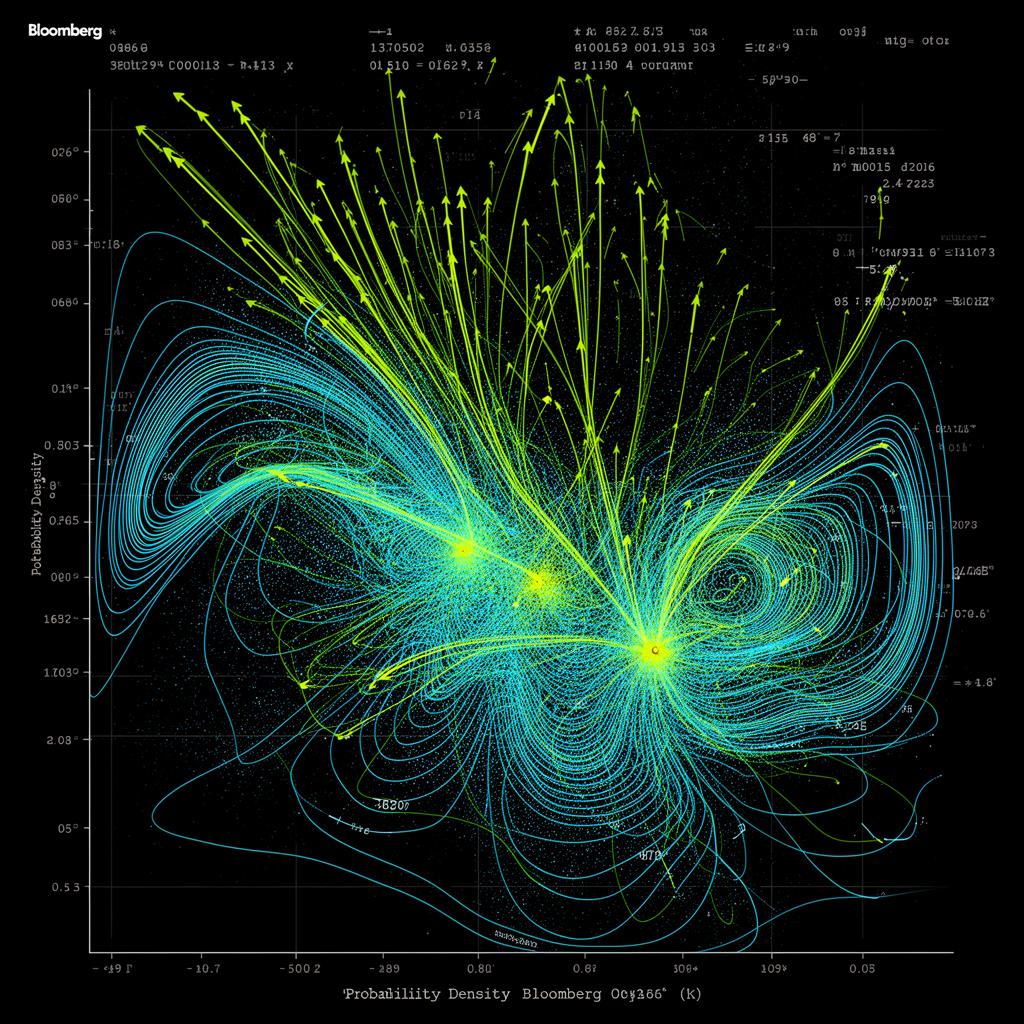
Probability density visualization with vector field arrows pointing toward demand hotspots
FIG.02 · DEMAND FIELD · AUSTIN · 18:42 UTC
∇λ → reposition vector · n=1184
live dispatch log · vehicle TSL-1184
SESSION 4f2a · austin-prod
  • T+00sRider drops at 30.2672, -97.7431OK
  • T+00.04sDemand kernel update → hex 8a48a5 hotOK
  • T+00.09sPolicy: REPOSITION to 6th & RaineyOK
  • T+00.12sSoC 64% — bypass charger queueOK
  • T+00.18sHygiene 0.91 — no wash neededOK
  • T+00.21sDispatch ACK — vehicle TSL-1184 enrouteOK
  • T+02m41sHailed by rider 0.7s after arrivalOK
§02.bThe PDE · Levenberg–Marquardt solver · live

The governing PDE,
solved every 120ms.

The demand intensity field λ(x,t) over the geofence polygon Ω is governed by a non-stationary advection–diffusion–reaction PDE with a self-exciting Hawkes source. We don't sample it — we numerically solve it and then collapse the action space with a damped Gauss–Newton step.

eq.01 · forward demand field
∂λ/∂t + ∇·(v(x,t) λ) = D∇²λ − γλ + ∑i κ(t−ti) δ(x−xi)
advection · diffusion · decay · Hawkes self-excitation
eq.02 · expected vehicle value
EV(v,c) = ∫tt+Δ λ(c,τ)·p(hail | v,c,τ)·R(c,τ) dτ − C(v→c)
eq.03 · constrained fleet objective
π*(v) = argmaxa∈A EV(v,a) − βe·𝟙[SoC<τe]·Φe(a) − βh·𝟙[Hyg<τh]·Φh(a)
eq.04 · Levenberg–Marquardt update (damped Gauss–Newton ↔ steepest descent)
(JᵀJ + λ·diag(JᵀJ)) δ = Jᵀ r  ⇒  θk+1 = θk + δ
λ → 0 : pure Gauss–Newton · λ → ∞ : pure steepest descent
iter k
0
λ (damping)
1.00e-2
‖r‖₂ (RMSE)
0.00000
status
GAUSS–NEWTON
θ = [μx, μy, σx, σy, α]
θ0
10.0000
θ1
8.0000
θ2
3.0000
θ3
3.0000
θ4
0.5000
residual convergence ‖r‖₂live
λ(x,t) · 80m hex resolution · Ω = AUSTINtick 0
● truth λ*(x,t)○ θ̂ (LM estimate)
State of Charge62.0%
Hygiene Score88.0%
π*(v) · dispatch decisionVEHICLE TSL-1184
derived from θ̂ after 0 LM iterations · ‖r‖₂=0.00000
§02.5Interactive demo

Pick a polygon.
Watch the brain dispatch.

live demand field · Austin
Next-dispatch recommendation
Decision log
  • awaiting dispatch…
§03Physical infrastructure
Driverless robotaxi at a ROBOBRILLIANCE charge pod with autonomous charging robot
POD-A · East Austin · 1.4 acres
16 inductive bays · 8 V4 Superchargers · 4 cleaning robots

We own the land inside the polygon.

Software alone can't dispatch a car to a pod that doesn't exist. ROBOBRILLIANCE acquires real estate inside each operational geofence — Austin, SF, Phoenix, and expansion markets — and outfits each parcel with the charging and cleaning hardware that driverless fleets actually need.

  • Inductive chargingMagSafe-style ground pods for Cybercab — vehicle parks, vehicle charges. No plug, no robot needed.
  • Robotic plug-inFor non-inductive fleets, articulated arm robots handle V4 Supercharger connections. 24/7, zero staff.
  • Robot cleaning baysPartnership track with Ground Truth-class platforms for interior/exterior cleaning between trips.
  • Pod-aware dispatchOur solver knows every pod's queue depth, kW available, and bay availability — in real time.
Austin, TXOPERATIONAL
07parcels in-polygon
San Francisco, CABUILD-OUT
04parcels in-polygon
Phoenix, AZACQUISITION
03parcels in-polygon
§04Who we serve

For operators running
100% unsupervised FSD.

We integrate with Tesla Robotaxi, Zoox, Waymo, May Mobility, and emerging Chinese operators (Pony.ai, WeRide, Baidu Apollo, AutoX). Drop our SDK into your dispatch layer or run us as a managed service co-located with your ops center.

Integration time≤ 3 weeks · SDK or REST
Decision cadenceEvery 8s · sub-100ms latency
DeploymentVPC, on-prem, or fully managed
PricingPer active vehicle · scale tiers
ComplianceSOC 2 · ISO 27001 · in progress
// begin pilot

Your fleet has 1,184 idle minutes per vehicle per day.
Let us spend them.

We onboard 3 new operators per quarter. Pilot includes a 90-day deployment in one geofence with full revenue uplift attribution.